About

Built for leaders ready to redesign

Archetype helps healthcare leaders turn a portfolio of AI pilots into a redesigned operating model their organization uses every day. We plan it, build it, and stay with your teams through adoption.

Sundar Ganapathy

Managing Partner

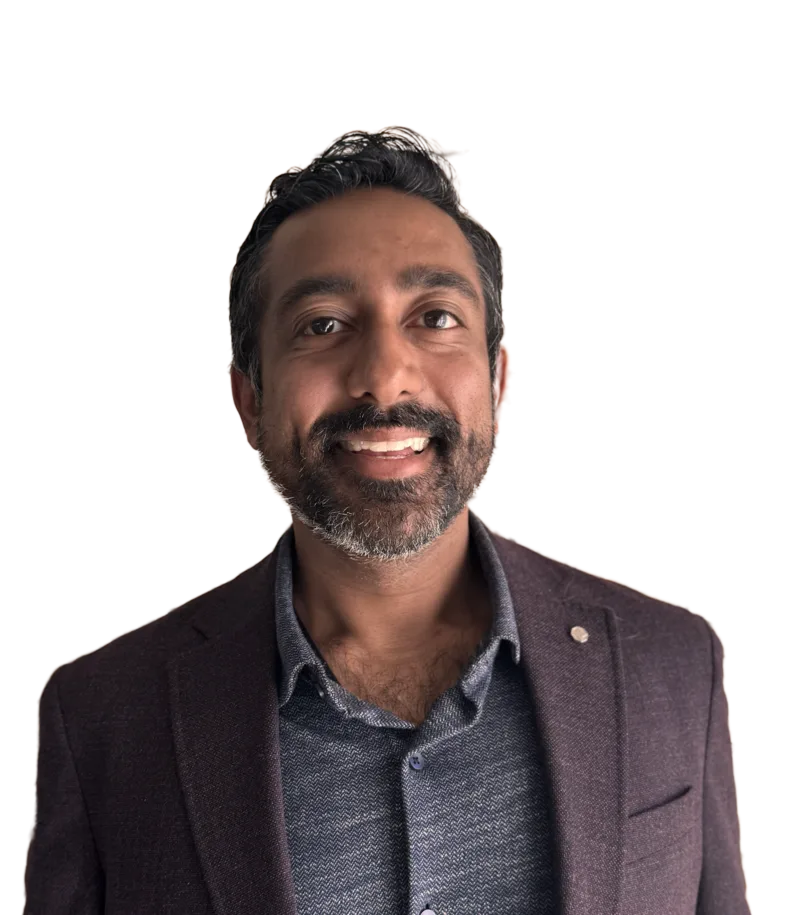
Sundar Ganapathy

Sundar Ganapathy founded Archetype to help pharmaceutical and healthcare executives capture measurable value from agentic AI inside the regulated work, not in pilot, at scale, against the original business case. He spent eight years at McKinsey & Company, most recently leading the Digital Growth for Life Sciences practice, where he advised top-15 pharma CCOs, Chief Digital Officers, and Medical Affairs heads on the operational reality of shipping commercial AI rather than the strategy of commissioning more pilots. His work at McKinsey delivered over $200M in Year 1 impact from at-scale AI solutions across pharma commercial and Medical Affairs, alongside a portfolio of earlier regulated-industry firsts, incubating and launching the first DTC pharmacy owned and operated by a pharmaco among them.

He left to build Archetype because the same pattern kept surfacing at the end of every engagement. He calls it the translation tax: value erodes at every handoff in a legacy consulting engagement because no single voice, strategic, expert, operational, or technical, owns end-to-end operationalization of the business case. The strategy lands. The SME deepens it. Ops scopes it. Tech builds something adjacent to what the original business case implied. Six months in, the deliverable works in demo and the P&L impact has quietly evaporated.

Archetype was built to close that gap inside the highest-stakes career challenge most senior healthcare executives will face: AI enablement in regulated industries. Winning isn't a matter of adopting AI for daily prompting. It requires rewiring the organization and rethinking how work gets done, across the medical-commercial firewall, through MLR review, inside privacy and PV constraints, on top of data architecture most pharmas haven't funded yet. The cost of getting it wrong isn't a failed pilot. It's twelve months of compounding operating-model debt while the orgs that moved early start to pull ahead.

Archetype is built for the executive whose name is on the operating-model commitment in October, and who has 24 months of expected runway to ship it. Not for the leader who wants another pilot. If that's the seat you're in, the next twelve months matter more than the calendar implies.

The resourcing model breaks the mold of legacy consulting, because Archetype doesn't just advise clients on AI, it operates as an AI-native organization. The team that frames the question is the team that ships the work, with autonomous agent teams carrying the workstream structure underneath and a senior leader carrying the client relationship on top.

Put another way: most consulting firms give you a junior team and 1/5th of a peer-level Partner's time. Archetype gives you the peer-level Partner and virtualizes the team overhead. Where agentic leverage isn't enough, we hand-select specialized senior talent and assemble small teams around each engagement, drawing from a pool of elite gig professionals, fractional executives, boutique agencies and development studios, each proven in delivering growth inside regulated healthcare. The result is the throughput of a full consulting pod without the overhead, the steering-committee theater, or the partner-to-team dilution.

Susie Ganapathy

Managing Partner

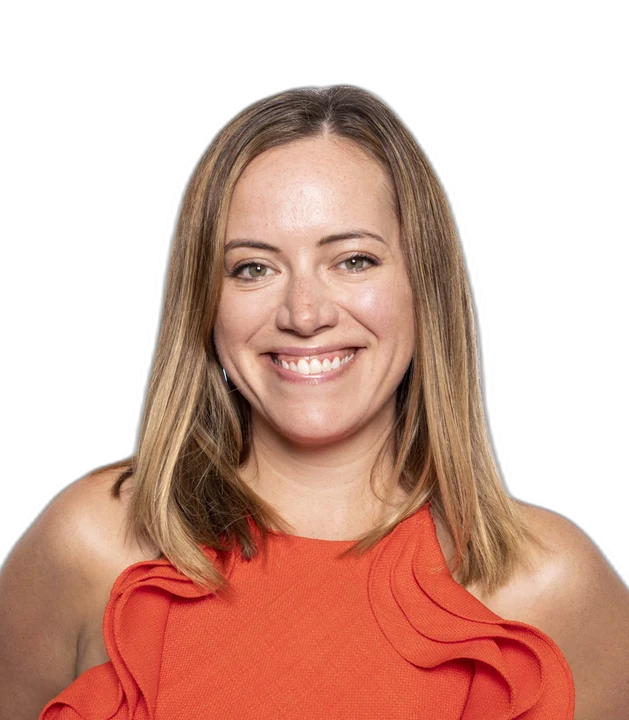
Susie Ganapathy

Susie Ganapathy has spent her career in healthcare communications. Over 20 years at Omnicom Health Group, her roles spanned strategy, operations, business development, and global client leadership. Her work has reached every audience in healthcare: HCPs, patients, payers, and advocacy groups. Transformation has been at the center of it. She changes how teams, agencies, and clients work together so the creative gets better and goes further.

She redesigned how global campaigns get made, moving a top-tier pharmaceutical client to a centralized model where Agile squads and local markets build each campaign together, a model that delivered more than $5M in projected savings in its first year. She brought Agile ways of working to Omnicom Health's agency networks, which helped retain $8M in business and win $10M in new work. She also led the shift to modular content and precision marketing so strong creative could reach more customers in more channels.

She has opened new routes to growth, too, including a direct-to-consumer channel that let an established pharma brand reach patients directly. And she built Omnicom Health's consulting practice from the ground up, leading engagements across competitive strategy, organizational design, go-to-market and launch planning, and sales strategy.

At Archetype, she leads marketing, communications, and transformation. She helps healthcare companies redesign how their content gets made and how their teams work once AI is part of the job.

Susie holds a BS in Advertising from The University of Texas at Austin and is an ICAgile Certified Professional.

How the firm runs

A small senior team with an agentic system behind it

Our senior partners frame the question and build the answer with you. An agentic system handles the workstream structure underneath.

An agentic operating system

Archetype runs on a custom agentic system that does the work an engagement manager and associate would do on a tier-one consulting team: workstream structure, analysis, first-draft synthesis, and a running memory of every stakeholder conversation across a six-month engagement. It's trained on tier-one consulting frameworks and tuned for regulated commercial work. The agents handle the structure, and the partners decide what to recommend.

Senior experts, matched to your engagement

When an engagement needs deep domain expertise, we bring in people who have done the work: former partner-level commercial strategists, Medical Affairs operating-model designers, regulated-data architects, AI engineers who have built agentic systems that pass MLR review, pharma marketing leaders who have run global agency networks, transformation and Agile leads who have moved large healthcare teams to new ways of working, payer-network experts, and clinical-AI delivery leads from large provider systems. You work with them directly.

Strategy and build in one engagement

Discovery, requirements, design, prototype, and pilot all happen inside one team. The recommendation and the working system come from the same people, on the same engagement, measured against the same business case.

What that means for you

A senior partner on every part of your engagement, and recommendations in front of you within a week of intake. The analysis is done before you walk into the room, so your time goes to the decisions.

Specialist bench

Specialists across every healthcare discipline

Each engagement draws on a curated bench of specialists matched to the work. Every one of them has built AI in regulated healthcare: pharma, biotech, payers, providers, pharmacies, medical devices, or health-tech.

  1. 01

    AI engineering

    Agentic systems design, prompt architecture, model orchestration, eval frameworks, and integration with regulated data pipelines.

  2. 02

    Data architecture and governance

    Healthcare data strategy, MDM, regulated permission models, HIPAA-aware infrastructure, and consent-aware activation across pharma, payer-claims, EHR, and pharmacy environments.

  3. 03

    Medical Affairs

    Field medical operating models, MSL effectiveness, scientific exchange systems, KOL strategy, and medical content workflows.

  4. 04

    Commercial strategy and launch

    Brand strategy, launch planning, segmentation, omnichannel design, field force effectiveness, and commercial operating models.

  5. 05

    Marketing and communications

    Modular content operations, global and local campaign models, precision marketing, agency roster and operating-model design, and launch, brand, and executive communications.

  6. 06

    Regulated-market design

    MLR/PRC, PV-adjacent workflows, claims substantiation, IT security, and the medical-commercial firewall.

  7. 07

    Workflow and product design

    User research, requirements writing, design sprint facilitation, prototyping, and pilot readiness.

  8. 08

    Transformation and change

    Organizational assessment and design, Agile ways of working, role, talent, and incentive design, adoption programs, internal communications, and capability-building.

  9. 09

    Implementation and delivery

    Pilot design, project management, vendor coordination, and pilot-to-production transitions.

Start the conversation